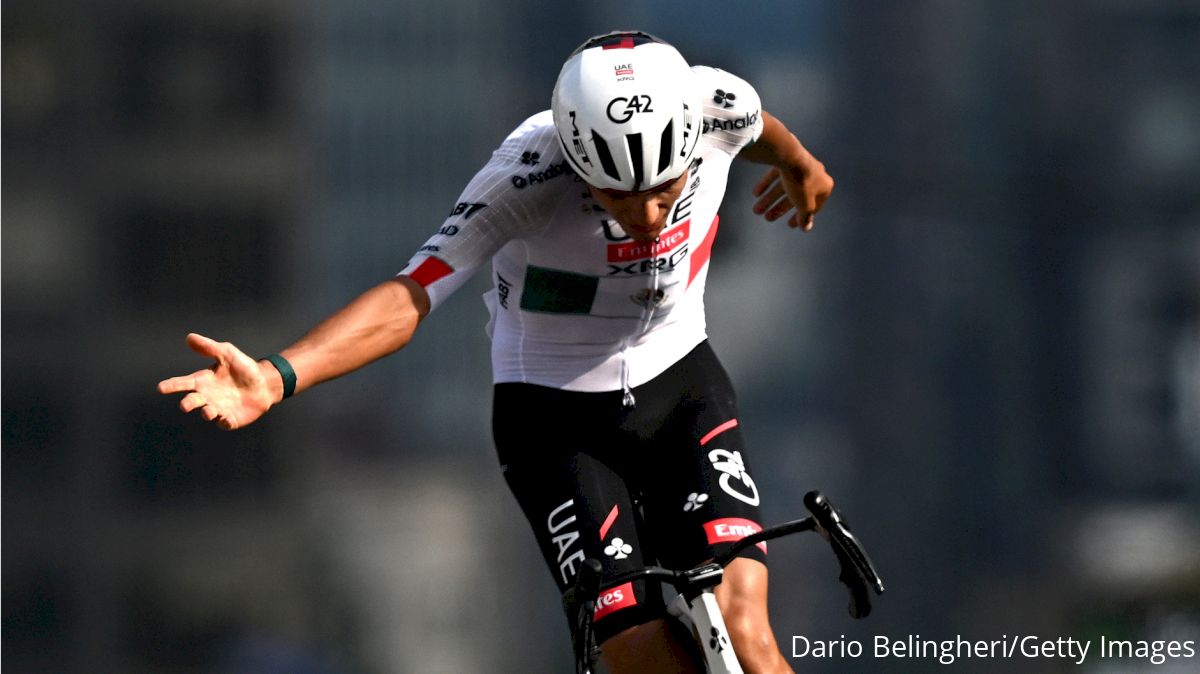
The 2026 Grand Prix Cycliste de Montréal may have just given cycling fans their best preview yet of the 2026 UCI Road World Championships.
Isaac Del Toro won the Sept. 13 race ahead of Paul Seixas, while Brandon McNulty, Quinn Simmons, Remco Evenepoel and Tom Pidcock rounded out the top six. Nine days later, many of those same riders will be back in Montréal preparing to race for a rainbow jersey.
- Subscribe To FloBikes To Watch The 2026 UCI Road World Championships
- Tadej Pogacar To Miss World Championships After Crash At Vuelta a España 2026
- USA Cycling Names Team USA Roster For 2026 UCI Road World Championships
- Who Won Stage 21 Of The Vuelta a España 2026? See The Full Results Here
That would make GP Montréal noteworthy under any circumstances. This year, however, its value as a form guide is difficult to ignore.
Most of the World Championships' 13.4-kilometer finishing circuit uses roads familiar from GP Montréal. The men's road race on Sept. 27 will finish with 12 laps around Mount Royal after a long approach from Brossard, turning the WorldTour race into something close to a dress rehearsal — though certainly not an identical one.
And the dress rehearsal produced some fascinating results.
Isaac Del Toro Just Made A Major Worlds Statement
No rider improved his Worlds case more than Del Toro.
The 22-year-old Mexican won GP Montréal after he and Seixas separated late on the Mount Royal circuit. Del Toro became the youngest winner in the history of the race and, more importantly for Worlds, demonstrated that he can win on the roads that will help decide the rainbow jersey.
That course evidence matters.
The men's Worlds road race covers 273.7 kilometers with 3,803 meters of climbing. Its 12 finishing laps repeatedly send riders through the Mount Royal terrain, including Voie Camillien-Houde and the steep ramps of Chemin de la Polytechnique before eventually returning toward the rising finish on Avenue du Parc.
GP Montréal cannot replicate nearly 274 kilometers of championship racing or the tactical differences of national-team competition. But Del Toro has answered one important question before Worlds even begins: He can make the decisive selection on these roads.
With two-time defending world champion Tadej Pogacar out after his Vuelta a España crash ended his season, there is no overwhelming favorite waiting for everyone else to beat.
Del Toro now belongs near the center of that conversation.
Paul Seixas Confirmed He Belongs Among The Favorites
Del Toro was not the only young rider whose stock rose in Montréal.
Paul Seixas finished second after staying with Del Toro into the decisive finale, adding another significant result to a 2026 season that already included a Flèche Wallonne victory and fourth place at the Tour de France.
And Seixas still is only 19.
France has selected him as its leader for Worlds, and GP Montréal offered compelling evidence for why. The Worlds course appears to reward riders who can repeatedly climb, accelerate and continue producing power deep into an attritional race. Seixas just demonstrated those qualities against a field filled with other Worlds contenders.
The unanswered question is scale. GP Montréal and the Worlds road race are not the same test, and the championship stretches to 273.7 kilometers.
But second place on the relevant Montréal roads makes it much harder to treat Seixas merely as a future star.
He is a contender now.
Team USA Suddenly Has Multiple Ways To Matter At Worlds
For American cycling fans, perhaps the most encouraging part of GP Montréal happened immediately behind Del Toro and Seixas.
McNulty finished third. Simmons finished fourth.
That gives the United States two riders who just produced top-four performances on terrain closely connected to the Worlds finale.
Their presence also makes the U.S. tactically interesting.
McNulty offers an excellent combination of sustained power and climbing ability, while Simmons' aggressive style gives the Americans a rider capable of trying to destabilize the race before the fastest favorites reach Avenue du Parc. Matteo Jorgenson, Neilson Powless, Sean Quinn, Artem Shmidt, Kevin Vermaerke and Larry Warbasse complete an eight-man U.S. road roster.
Worlds also changes the relationships riders normally have during the season. McNulty usually races for UAE Team Emirates-XRG, Del Toro's trade team. In the world championship, McNulty rides for the United States and Del Toro for Mexico.
That national-team dynamic makes simply projecting GP Montréal's finishing order onto Worlds impossible.
It also could create opportunities for an American team that suddenly looks deep enough to use them.
Remco Evenepoel's Fifth Place Shouldn't Be Overanalyzed
Finishing fifth ordinarily might not sound like a major statement from Evenepoel.
Context matters.
Evenepoel won GP Québec two days earlier and remained among the leading riders at GP Montréal. More importantly, nothing about fifth place changes the qualities that make him dangerous at Worlds: elite solo power and the ability to handle repeated climbing.
Belgium also has tactical options that Evenepoel did not have in a normal trade-team race. Wout van Aert gives Belgium another potential winning route, while Maxim Van Gils and others can provide additional cards.
The Montréal result therefore should not be interpreted as proof that Del Toro and Seixas suddenly have surpassed Evenepoel.
It does show that Evenepoel will have plenty of company.
Tom Pidcock Is Still Right There
Pidcock followed fourth place at GP Québec with sixth in Montréal, giving him two top-10 results in Canada immediately before Worlds.
His punchy, technical profile fits many of the demands of Mount Royal, and Great Britain can surround him with additional options including Adam Yates and Oscar Onley.
As with everyone else, however, Worlds introduces an endurance question that GP Montréal cannot completely answer.
The men's championship covers nearly 274 kilometers, with roughly 161 kilometers coming on the final Mount Royal circuit alone. By the closing laps, accumulated climbing and repeated accelerations may matter more than any single ascent.
Pidcock's Montréal performance keeps him firmly in the discussion. It doesn't settle how he will handle the full championship distance.
GP Montréal Gave Us Clues — Not The Worlds Result
The biggest lesson from GP Montréal might be how open this world championship has become.
Pogačar's absence removes the rider who won the 2024 and 2025 road world titles and changes the fundamental tactical question facing the field. Instead of constructing an entire race around stopping one overwhelming favorite, multiple nations now arrive in Montréal with plausible ways to win.
Del Toro has actual victory evidence on the relevant roads. Seixas proved he can go with him. McNulty and Simmons gave the United States two legitimate cards. Evenepoel remains one of the championship's biggest threats, and Pidcock remains firmly in contention.
But Worlds will add 273.7 kilometers of racing, 3,803 meters of climbing, 12 finishing laps and national-team tactics to the equation.
GP Montréal didn't tell us who will wear the rainbow jersey.
It told us who looks ready to fight for it.
Catch All The Best Races, Highlights, Insight, News And More On FloBikes
FloBikes is the streaming home to some of the best cycling from across the globe. Check out the broadcast schedule to watch more of your favorites in action.
FloBikes Archived Footage
Video footage from each event will be archived and stored in a video library for FloBikes subscribers to watch for the duration of their subscriptions.